Humanoid Robot Cuts Model Processing Delay 8x with NVIDIA Tech in Internal Tests
Bear Robotics has achieved a significant reduction in model processing time for its KR1 humanoid robot, cutting it from 500 milliseconds to 60 milliseconds using NVIDIA software. This improvement is attributed to KINO-2, a new robot-learning platform designed to translate human demonstrations into tasks the KR1 can perform.
The company also reported a 4.2-fold improvement in its own model, reducing processing time from 72.3 milliseconds to 17.2 milliseconds. These figures, derived from Bear's internal measurements, refer specifically to model inference, the process of generating an output from a trained model, and do not indicate an eightfold increase in the robot's physical speed or task completion time.
Bear Robotics, which develops robots for commercial operations, announced KINO-2 at NVIDIA GTC Berlin. The company has deployed over 16,000 robots across more than 5,000 customer locations, though most are service robots rather than humanoids.
Cutting Robot Response Delays
KINO-2 enables KR1 to learn object-handling tasks from demonstrations, eliminating the need for engineers to program every movement individually. Bear collects demonstrations, trains and refines models, and evaluates the robot's behavior before testing it in customer operations.
The platform supports both internally developed models and external foundation models, which can learn patterns from training data and apply them to various tasks involving different objects and environments.
To run the software on KR1, Bear integrated NVIDIA Isaac OS into its perception system, utilizing NVIDIA Jetson AGX Thor hardware and incorporating NVIDIA Holoscan SDK 5.0. The company also employed NVIDIA TensorRT and model quantization to reduce inference delays.
According to Bear, these changes significantly lowered NVIDIA Isaac GR00T inference time to approximately 60 milliseconds from an initially unoptimized 500 milliseconds. Its own model achieved a reduction from 72.3 to 17.2 milliseconds.
Faster Inference, Faster Robots?
Faster inference times could enable robots to respond more quickly when identifying objects and deciding how to handle them. However, the announcement lacks comparative data on complete task times, manipulation accuracy, and long-term reliability.
From Demonstrations to Deliveries
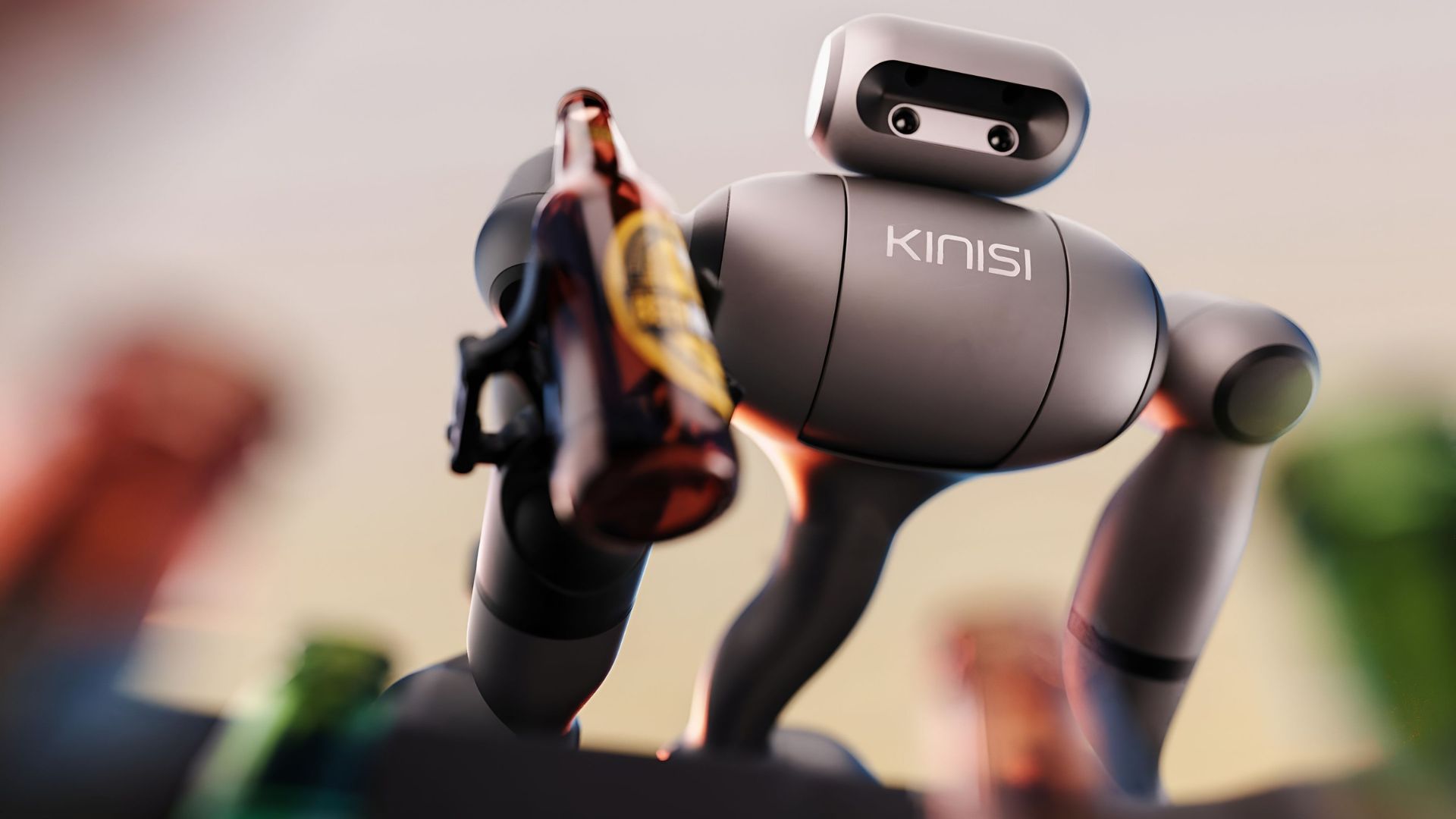
At NVIDIA GTC Berlin, Bear demonstrated KR1 performing a warehouse workflow combining object handling and transportation. The robot receives an order, picks bottles, places them in a crate, delivers the crate, and returns with an empty one.
This demonstration integrates KINO-2's learned manipulation skills with Bear's existing navigation, control, and workflow software. Bren Pierce, Bear Robotics' chief robotics officer, emphasized the value of demonstrations, stating, 'The people doing a job already understand its products, equipment, and sequence of work. Demonstrations let us capture that knowledge and teach the robot.'
Bear is also developing manipulation capabilities through customer pilots involving supermarket returns and warehouse crate handling. The company aims to combine specialized mobile robots that transport goods with KR1 humanoids that handle objects, operating through shared fleet-management and workflow systems.
While the GTC demonstration showcases the capabilities of these robots in a defined warehouse task, Bear has not disclosed performance results establishing how reliably KR1 can complete broader customer workflows without intervention.