A Shifting Landscape of Hospitality
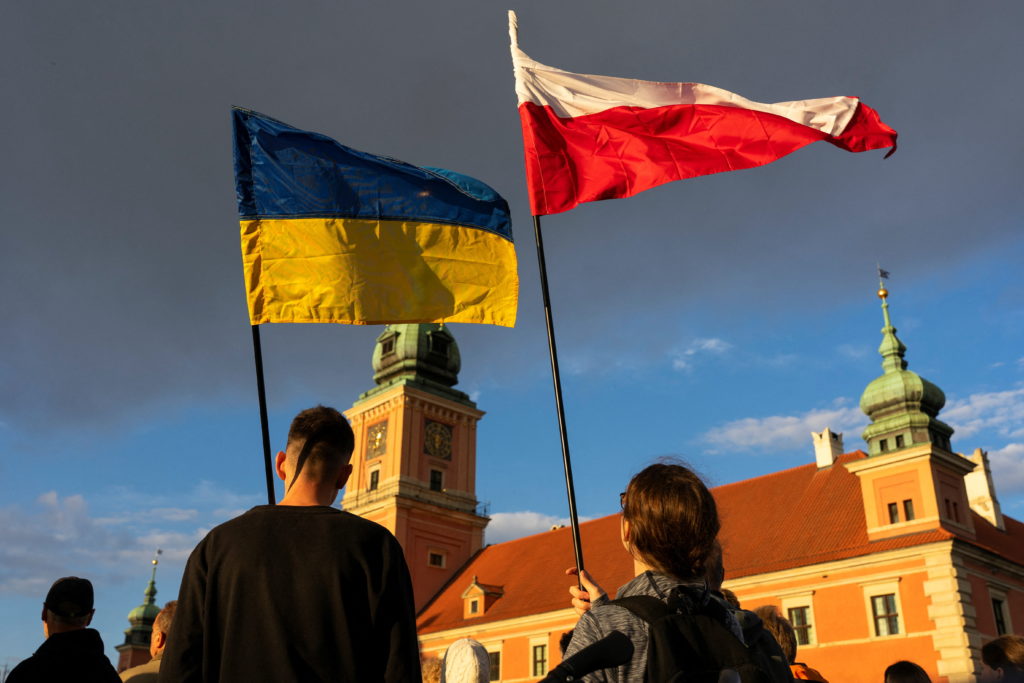
Poland, a staunch supporter of Ukraine since the Russian invasion, has witnessed a dramatic shift in public opinion towards Ukrainian refugees. Once embraced with open arms, nearly a million Ukrainians now face growing hostility in their adopted homeland. This transformation is fueled by a complex interplay of historical grievances, political manipulation, and social tensions.
A Warm Welcome Turns Cold
In March 2022, Warsaw's Central Station was a bustling hub of refuge for Ukrainians fleeing the war. Natalia Klimenko, a Ukrainian refugee, recalls the overwhelming support and kindness she received upon her arrival. However, four years later, the tide has turned, with over half of Poles opposing the idea of providing sanctuary to those escaping the conflict.
Historical Wounds and Political Rhetoric
The Polish-Ukrainian relationship is fraught with historical wounds, exacerbated by recent events. The slaughter of 100,000 Poles in the region of Volhynia during World War II, carried out by Ukrainian ultranationalists led by Stepan Bandera, remains a source of deep resentment. Ukraine's President Volodymyr Zelenskyy's decision to name a contemporary military unit after the Second World War Ukrainian insurgent army has further inflamed Polish sensitivities.
Grzegorz Braun, an ultra-right politician, has capitalized on these tensions, blaming Ukrainian refugees for social and economic woes. His antisemitic beliefs and hatred for the 'Ukrainization' of Poland have found a receptive audience, with Braun securing 1.2 million votes in the 2025 presidential election.
The Impact on Ukrainian Refugees
The changing political and social landscape has had a profound impact on Ukrainian refugees. Natalia Panchenko, president of the nonprofit Stand With Ukraine, reports a surge in hate crimes against Ukrainians. Many refugees, feeling unsafe, are leaving Poland for other countries, with some even returning to Ukraine despite the ongoing conflict.
Russian Influence and Hybrid Warfare
Behind the scenes, Russia is suspected of stirring the pot of resentment. Defense analyst Filip Bryjka, specializing in Russian hybrid warfare, reveals that since 2014, Russia has been conducting long-term disinformation campaigns targeting Polish-Ukrainian relations. These campaigns often exploit historical disputes, further fueling tensions.
A Complex Web of Factors
The situation is multifaceted, with various factors contributing to the growing hostility. Some commenters highlight Ukraine's glorification of WW2 anti-Polish war criminals, the influence of pro-Russian right-wing politicians, and the behavior of a loud minority of Ukrainians in Poland. Others point to economic resentment, compassion fatigue, and political manipulation as key drivers.
"I would probably care more if Poles didn't glorify their own interwar thugs, now it's just hypocrisy on their side."
"The tragic thing that I see in this is that it's incredibly similar to how Russia views its history: they never did anything wrong; everyone around them is the bad guy, etc. Russia never really atoned for its sins, and we're seeing the consequences now."
"I got death threats multiple times for only mentioning Sahryn, Pavlokoma and Piskorowice. Now even I want all Ukrainians to leave. Not because I hate them, but because I want them to live somewhere in peace, not being targeted every day by local 'patriots' only waiting to hear someone with a different accent on the street."
"To be honest, any Ukrainian who respects UPA respects them for fighting against soviets. You would not be able to find any substantial number of Ukrainians that are proud of anti-Polish conduct."
A Regional Concern
The hostility towards Ukrainian refugees is not limited to Poland. A Ukrainian family in Prague, Czech Republic, shares their experience of growing hostility, including verbal insults and physical damage to their car due to its Ukrainian license plate. They also reveal the existence of schools with 'no-Ukrainians' classes, a form of segregation that is deeply concerning.
"Europe is facing growing nazism because of the unrestricted Russian propaganda in social media."
"This Ukrainian media will do what's needed. They collaborate with lawyers and help people all the time. But often government does nothing. It is a known fact that Ukrainian children are bullied on a mass scale in Czech schools even by teachers and nobody does anything with it."
The Way Forward
As the war in Ukraine continues, the challenges faced by Ukrainian refugees in Poland and beyond are likely to persist. Addressing these issues requires a nuanced understanding of the historical, political, and social factors at play. It is essential to counter misinformation, promote empathy, and foster dialogue to bridge the divide between host communities and refugees.
Conclusion
The story of Ukrainian refugees in Poland is a complex and evolving one, shaped by historical wounds, political manipulation, and social tensions. As the war rages on, the international community must remain vigilant in addressing the challenges faced by refugees, ensuring their safety, and fostering understanding between host communities and those seeking sanctuary.

